Please enable JavaScript
Email Marketing Services by Benchmark
TrainerTiff: weight loss >
Showing posts with label weight loss. Show all posts

Thursday, June 14, 2012

10 Day Slim-Down Results

After making a commitment to myself to follow my 10 Days, 10 Rules Slim-Down, I got the results I was looking for.

In just 10 short days, I dropped 4 pounds and reduced my bodyfat percentage by 2.2%.

I was especially happy to get my bodyfat back under 20%. I use that number to gauge when things are getting out of control -- we all have some sort of tool to gauge this. For most, it's the number on the scale, for me it's my bodyfat percentage.

Chart from American Council on Exercise
I can always tell when my diet has been slipping, when I start to look a little softer than I'd like. Yes. Even I slip on my diet at times. And when this happens, it's time to be tough on myself!

The fix? My 10 Days, 10 Rules Slim-Down. It was difficult to limit my starchy carbohydrates to one serving per day and eliminating my after dinner glass of red wine. And dairy. Yes, saying goodbye to my beloved cheeses for 10 days was a little tough. But after the first couple of days, my body adjusted and everything went smoothly.

I almost had a major slip-up -- or so I thought. Saturday was the night of the Pacquaio vs. Bradley fight. The family and I went to a fight party to watch it. As you know, with any party, you fully expect all sorts of indulgences to be there. I brought a salad filled with tons of veggies and the host provided healthy options for dinner, which was nice. I did take two sips of a martini, felt guilty about it then gave the rest to Hubby. Whew.

Otherwise, I stayed true to the rules (with the exception of a couple graham crackers and spoonfuls of red beans and rice) and exercised every day. My normal workout routine is 4 days per week. That's a good maintenance routine for me, but when I'm trying to make some changes in my body, I know I have to step it up. And I did. And it worked!

I kept a log of all my meals over the 10 days. Check it out below. Now that the 10 days are over, what's next? Well, I of course will follow a clean diet and watch my starchy carbohydrate intake -- that's what does it for me. Too much bread (whole wheat even) or pasta (whole wheat even) will make the pounds creep up. I'll go back to my 4 days per week workout routine and limit my red wine indulgence to one glass per week. And that ought to put me in a good maintenance routine.

If you were following along with the Slimdown, I hope you got the results you were looking for. If not, consider using my meal plans and exercise routine as a guideline and give it another try.

Day 1 Mon
8:30 green smoothie, 1 banana, 1 cup grapes, 1/2 cup cherries
1:00 1 cup bulger wheat veggie salad, medium mixed greens salad with homemade vinaigrette
4:30 medium greens salad
6:30 medium bowl of cooked greens
8:30 slow cooked chicken breast, 2 cups broccoli
11:30 cup grapes (oops, late night munchies)

2 liters water. Workout (at home): jumping jacks, push-ups, rear delt raisies, abs circuit

Day 2 Tue
8:30 cherries, banana, pear
12:00 protein shake
3:00 vegetarian chili and salad
6:00 large salad
8:30 chicken breast and peas

2 liters water. Workout (at gym): 20 min cardio, back, chest

Day 3 Wed
7:45 apple, pear, hot water with lemon
9:45 oatmeal with cinnamon, stevia and almond milk
12:00 strawberry protein shake
3:30 large salad with nutritional yeast sprinkled, 1 boiled egg, 12 almonds
7:00 2 baked chicken wings, 1 cup peas, coffee

2 liters water. Workout (at home): abs

Day 4 Thur
9:00 green smoothie, apple
1:30 protein shake, homemade light veggie fried rice
6:00 1 boiled egg, apple
8:30 salad with nutritional yeast, handful pistachios

2 liters water. Workout (at gym): 20 min cardio, shoulders, biceps, triceps

Day 5 Fri
7:45 green smoothie
9:45 apple
11:45 protein shake
1:30 1.5 bananas, handful of almonds
4:30 can of tuna, 10 seed crackers
8:30 tilapia, 1.5 cups peas
10:30 graham cracker (oops)

2 liters water. Workout (outside): played basketball with the family and ran hills

Day 6 Sat (fight party)
9:00 coffee, banana, grapes
1:30 protein shake
2:00 chicken salad over spinach
5:00 2 graham crackers
8:30 1/2 lumpia, 1 chicken leg, 1 cup broccoli, salad, 2 sips martini, 3 spoonfuls mango and graham cracker dessert

2 liters water. Workout (at gym): 20 min cardio, legs

Day 7 Sun
7:30 banana
10:30 banana
1:30 chicken salad sandwich on whole wheat, salad
5:30 1/2 banana
7:15 3 spoonfuls red beans and rice (oops)
7:45 orange roughy, salad and bowl of cooked greens

2 liters water. Workout: Bikram yoga session

Day 8 Mon
9:30 banana, apple
1:30 veggie sandwich on whole wheat, large salad
4:30 orange, banana
8:30 pork chop, cooked greens

2 liters water. Workout (at home): abs

Day 9 Tue
9:00 2 cups grapes, banana
12:00 protein shake
4:00 1.5 cup basil, tomato pesto pasta
7:00 1/2 protein shake
8:30 pork chop, salad

2 liters water. Workout (at gym): 30 min cardio, back, chest, abs

Day 10 Wed
8:30 1 cup pineapple, banana
11:00 banana
12:00 1/2 cup oatmeal
2:00 pineapple, banana
4:00 1/2 can tuna, 10 seed crackers
7:30 baked chicken thigh, 1 cup peas

2 liters water. Workout (at home): abs

Sunday, June 3, 2012

10 Days, 10 Rules Slim-Down

Every now and then, even I, need to get tough on myself. My maintenance diet with an indulgence here and there has involved a few more indulgences than I intended. So, I've decided to get strict on myself for ten days.

To start a program, sometimes it's helpful to get into it and be very specific as to what you're eating and what you're doing for exercise.

Below, are the ten rules I'll be following for the next ten days from Monday, June 4 through Wednesday, June 14. If you're looking to start a program or fine tune your diet and exercise plan, join along with me! Are you up for the challenge?

Follow me on Twitter @trainertiff for my meal updates, workouts and overall progress. Let me know how you're doing as well. At the end of the ten days, I'll put up a post on how things went along with my food logs.

This starts tomorrow, June 4. Good luck!

RULES
1.  Eat a small meal every 3-4 hours which will be about 5-6 small meals each day.
2.  No processed food.
3.  No dairy.
4.  No added sugar.
5.  Drink a minimum of 2 liters of water each day.
6.  No dining out.
7.  Exercise every day.
8.  Limit starchy carbs -- one serving each day and none in the evening.
9.  Get minimum protein requirements each day.
10. No alcohol.

Tuesday, January 31, 2012

31 Days of Weight Loss Tips: Day 31 Surround Yourself with Support

Photo by Marcie Casas on Flickr
Having a good support team can be the difference between reaching your goals and being in a perpetual cycle of trying to reach your goals.

Achieving your weight loss goals can be difficult when it feels like everyone around you is sabotaging your efforts.

Some of the most common things I've heard: "I want to lose weight, but my friends always want to go out drinking," or "I've been working out, but my wife doesn't cook anything healthy," or "I have been eating better but my husband always comes home with junk food." Sound familiar?

There's nothing worse than making strides toward reaching your weight loss goals, only to have your progress stunted by those around you -- mainly family and friends.

The best thing you can do is to tell them what you're trying to do. And ask them to be supportive. Let them know that your goal is really important to you and be specific about how they can help.

That may mean telling your friends that you may not go out to the bars with them as much or if you do, that you'll be drinking water or a mocktail and for them to not give you a hard time about it.

You may have to sit your spouse down and tell them very plainly that bringing junk food into the house or certain meals are ruining your efforts and ask them to respect what you're trying to do and be supportive.

If trying to reach out to your friends and family simply doesn't work -- get online. Find people who share your attitude toward fitness on Facebook or Twitter. There are a lot of fitness and diet professionals who have Facebook pages and Twitter accounts where they share tips and offer support.

Joining a group class or a league is another alternative. Groups are great because everyone is in it together and have similar goals. You start feeling accountable to the group and won't want to miss a session or practice.

Put in a little effort to find support and/or make those around you be supportive, and you're more likely to reach your weight loss goals.

Sunday, January 29, 2012

31 Days of Weight Loss Tips: Day 28 Reduce Starchy Carbohydrate Intake

Photo by Johnny Jet on Flickr
They can be hard to avoid -- potatoes, beans, pasta, bread, cereals and grains -- are present in just about any meal. But if you're having a tough time shedding fat, you might need to reduce your intake of starchy carbohydrates.

We know that weight loss can be difficult if we eat too many carbohydrates in the form of sugary foods -- but it can also be difficult if too many starchy carbs are eaten.

The key is to reduce starchy carbs, not eliminate them entirely. Our bodies rely on the glucose derived from the breakdown of carbs to provide energy for all types of bodily functions from walking down the street to thinking about walking down the street. If you drastically reduce carb intake, you'll definitely feel it -- through crankiness, lack of concentration and loss of energy.

The body's immediate source of energy comes from the glucose circulating in the bloodstream from the carbs we eat, and starch being the main source.

As carbs are eaten and digested, they are converted into glucose. As the level of glucose in the blood rises, insulin is released in order to keep the amount of glucose in the blood at a safe level. Insulin helps transfer extra glucose from the blood to the muscles and liver for storage.

As discussed in the book "Advanced Sports Nutrition" by Dan Benardot, our muscles and liver can store excess amounts of carbs, but only to a certain point. It is when the muscles and liver reach a saturation point, that the excess carbs are then stored as fat.

This is why one can workout forever, but never quite get the muscle definition they desire.

Non-starchy vegetables like broccoli and spinach are better carb choices because they are lower in carbs and don't have the same impact on blood glucose levels as starchy vegetables like potatoes and corn.

Determining what is a good amount of carbs to have is completely individual. Factors such as gender, age, weight and activity level need to be considered.

When I was training for my figure competitions, it took some trial and error to find what worked for me. I eventually found a good balance for myself -- heavy training days required more carbs and light training days I could eat fewer carbs to achieve my goal bodyfat percentage.

The Institute of Medicine recommends at least 130 grams of carbohydrates per day, which is minimal usage of glucose by the brain. The desirable daily range of carbohydrates (both starchy and non-starchy) is between 45-65% of total calories (also referred to as the DV, daily value).

A person consuming 1500 calories a day should have between 169 to 244 grams of carbs total for the day. Using that as a starting point, if you're exercising consistently 4-5 days per week and you are eating healthful meals daily, you might want to start to reduce starchy carbs for the day by 25 grams. Try that out for a week, see how it goes and then adjust further if necessary.

Recources:
Advanced Sports Nutrition by Dan Benardot, 2006
Fitness Professional's Handbook, 2007

Friday, January 27, 2012

31 Days of Weight Loss Tips: Day 27 Vary Your Workouts

Photo by Simon Schoeters on Flickr
If you want to maintain your weight do the same workout over and over -- but if you want to see the number on the scale decrease, you've got to change up your workouts.

I can't tell you how many people I hear complain about not being able to achieve their ideal weight, yet do the same workout over and over -- for years even.

Maintenance workouts that involve doing the same type of workout are beneficial for cardiovascular fitness and help your body stay exactly the same. For example, going for your usual morning run or walk every day or doing your customary 20 minutes on the elliptical at the gym are great for maintenance.

But, if you're trying to shed some pounds or make some changes, you need to step it up. Our bodies adapt very easily to our exercise routines. It is imperative to keep your body guessing at what's to come and most importantly, make your workouts a challenge. If you don't find your workout to be tough -- it's not, and you need to turn up the intensity.

The standard is to change your routine at least every six weeks. But I find it beneficial to constantly change exercises and types of cardio. I've been known to do a different workout each time I go to the gym. How you choose to vary your workouts is individual and up to you.

Here are some tips:

  • Try a new group class. Spinning, Zumba, yoga, pilates and all the new fusion classes are a great way to change things up.
  • Use fitness magazines for new workouts ideas. You're likely to find one if not several things you've never tried. 
  • Change the type of workout program you do on your favorite cardio machine. For example, if you always do aerobic training, try doing interval training.
  • Join a league. Basketball, softball, flag football or even dodge ball are great options.
  • Increase your weights. Here's a way you can actually do the same weight training program, but make it more challenging by going up by 10-15 pounds. 
  • Take on new activities like biking, running or hiking. 

Wednesday, January 18, 2012

31 Days of Weight Loss Tips: Day 18 Avoid Store Bought Juice

Photo by manwithface on Flickr
Walk into any grocery store and find the juice -- you'll be met with a plethora of options from orange to grape to apple to tempting blends of pineapple, cranberry and strawberry. But if you're trying to lose weight and be healthier, avoid all of them.

Juice that can sit around on store shelves has been pasteurized. The pasteurization process heats the juice to a high temperature to kill off harmful bacteria, mold or unwanted microorganisms that may be present.

And when the bad stuff is eliminated, so is the good. You are left with a denatured juice that has a tiny amount of nutrients left, which is why juice is fortified -- to add back some the nutrients that are lost (and not all are added back).

According the the Center for Disease Control and Prevention, 98% of juices sold in the United States are pasteurized and can be found as frozen concentrate, stored at room temperature or in the refrigerated section in the grocery store.

Store bought juice is basically sugar water. And many contain one of the worst sugars you can consume -- high fructose corn syrup.

Don't be misled by claims on the label, like "100% juice" or "not from concentrate" and think that this type of juice is best for you. These types of juice are missing many of the fruit's natural vitamins, minerals and enzymes. And sure, 100% juice at least doesn't have added sugars, but it still lacks the fruit's natural nutrients.

So if you are going to have juice, make it yourself with a juicer. And if you don't have a juicer, opt for eating a piece of fruit instead -- you'll be much better off.

Resources:
United States Department of Agriculture
Center for Disease Control and Prevention

Saturday, January 14, 2012

31 Days of Weight Loss Tips: Day 14 Plan Your Meals


In order to successfully shed some pounds, you need to plan. Going from meal to meal and trying to figure out what you're going to eat at the moment hunger strikes, is a recipe for disaster.

What happens when you are hungry and have nothing on hand to eat? Most likely, you'll find whatever is closest and fastest. And oftentimes, those choices sabotage your weight loss efforts.

Before the week starts, you need to know exactly what you'll be eating and at what time for the entire week. So, if I were to ask you, "OK, what's for lunch on Thursday?" you need to be able to answer that question immediately.

Here's how to do it: Since for most of us our week starts on Monday, let's use that as our week start point. On the Saturday before, sit down with a piece of paper and pen and write out all of your meals for the week. Make a grid that includes each day of the week  meal times -- everything from breakfast to snacks to dinner. On Sunday, write out your grocery list accordingly and go shopping.

On Sunday, do any necessary prep work or meal preparation for Monday's meals. You can even pack those meals in storage containers and sit them in the fridge so they're are ready to go on Monday. Repeat this process every day. The key is that you want to have the next day's meals ready to go the day/night before.

And of course, if you usually make dinner each night, that's fine to do -- you don't have to make dinner the day before.

Here's a useful tip: Making large quantities of meals that will last a couple of days is a big time saver. A friend of mine who works full-time and is a super busy mom has a great strategy. She makes Sunday her cooking day and cooks all of her meals for the week and stores them so that every day all she has to do is heat up her food. This way she saves herself a ton of time because the cooking is already done.

With a little planning and preparation, you'll set yourself up to succeed with your weight loss efforts. And adopting these habits will make for long-term success.

Monday, January 9, 2012

31 Days of Weight Loss Tips: Day 9 Reduce Caffeine

Photo by Sarah Fleming on Flickr
To help yourself in the weight loss process, cut down on caffeinated beverages.

Consuming an excessive amount of caffeine puts an enormous strain on the liver, can negatively affect sleep patterns and increases cortisol levels -- all of which contribute to fat gain.

You may have heard that there are some health benefits associated with coffee. Some research shows that coffee may have some benefits such as lowering the risk of certain cancers. But the caffeine in coffee can have adverse effects on weight loss.

It is wise to limit caffeine consumption from coffee and soda, here's why:

Taxing on the liver. The liver metabolizes the food we eat and is our main fat burning organ. The liver also metabolizes caffeine breaking it down so the body can process it. Consuming large quantities of caffeine can be burdensome to the liver. An optimally functioning liver is ideal for efficient food metabolism. Limiting caffeine consumption in order to reduce the burden on the liver is beneficial for weight loss.

Raises cortisol levels. Cortisol is a stress hormone produced by the adrenal glands in response to stress. Cortisol taps into fat stores to use as energy under stress and moves fatty acids to another location such as muscle for energy. But if that fat isn't used up, it gets stored again but usually as belly fat. This is because there are a greater number of fat receptors in the abdominal region. A study done in 2005 by the National Institutes of Health found that caffeine intake increased the secretion of cortisol.

Can disrupt sleep patterns. Insomnia is a sign that your diet may contain too much caffeine. When caffeine is consumed, norepinephrine and epinephrine is released -- stress hormones that act on the brain and nervous system. Working together they increase heart rate, blood pressure and cause that jittery feeling often making sleep difficult. Getting too little sleep can raise cortisol levels resulting in the problems listed above.

Resources:
National Institutes of Health
MedicineNet
Mayo Clinic
Mercola 
Scientific American

Sunday, January 8, 2012

31 Days of Weight Loss Tips: Day 8 Do Cardio on Empty Stomach

Photo by jweingardt12 on Flickr
If you want to see your body start changing in a hurry -- and let's face it, who doesn't? -- start doing cardio on an empty stomach first thing in the morning, a very effective method of burning fat.

When we exercise our bodies use carbohydrates, fat or protein for fuel. Carbohydrates and fat are most common, and our bodies only use protein for fuel under certain circumstances.

When we consume carbohydrates immediately before a workout, our bodies will use the glucose derived from those carbs as fuel since it is the most readily-available energy source. If carb-based glucose isn't present, the body will next turn to fat for energy. So, if you refrain from eating before your workout, your body is forced to pull from its fat reserves for fuel.

Additionally, high-intensity cardio has been shown to burn fat more effectively than low-intensity cardio, according to research referenced in "Advanced Sports Nutrition" by Dan Benardot.

And though many people are unable to exercise first thing in the morning on an empty stomach for very long without feeling nauseated or extremely fatigued, the good news is that one doesn't need to spend a considerable amount of time doing this for it to be effective.

Start small, do as much as you can. Try a light warm-up, maybe march in place. And then start your day off with an activity such as jumping jacks. Then build up over time -- it can be very effective.

Resource:
Benardot, D., Advanced Sports Nutrition, 2006

Friday, January 6, 2012

31 Days of Weight Loss Tips: Day 6 Understand Digestion

 Photo by Spectacles on Flickr
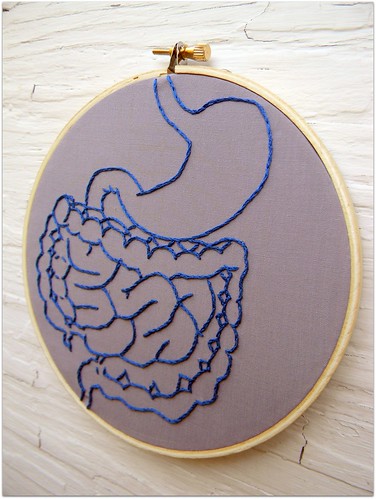
Digestion is rarely considered when diet and exercise plans are devised for weight loss. Promoting efficient digestion could be the missing link for many people who have been struggling with losing those unwanted pounds.

If your body can't break down food efficiently, it can lead to fat storage and a gut full of heavy, rotting gunk.

Digestion is the process in which the body totally breaks down the food we eat. This process begins in the mouth as soon as we take a bite of food and begin to chew. Saliva then starts to break down the food before it is passed down to the stomach. From the stomach the food moves to the small intestine, then to the large intestine and then finally to the colon.

The whole process can take up to 30 hours -- a rather long and energy-draining function.

Ever feel sluggish and devoid of energy after a heavy meal? Well, our bodies having to focus an incredible amount of energy on digestion has a lot to do with it.

Digestion is more efficient if we eat certain foods together and avoid eating others together, for example combining starches and proteins in the same meal is best avoided.

Food that isn't digested well can putrefy and rot in the stomach, causing bloating and indigestion. Food  then has a more difficult time passing through the intestines, often clogging up their some 30 feet. And because the food is rotten, no nutrients are being passed through the body, making a bad situation even worse.

The good news is that there are some things you can do to promote efficient digestion. Here are some tips:
  • Practice proper food combining
    • only eat one concentrated food at a time (starches, proteins)
    • only eat fruit on an empty stomach 
    • don't eat several types of meat in same meal
  • Eat vegetables first in any meal
  • Eat light breakfasts
  • Save heavier meals for dinner
The tips listed above will be covered in more detail in blogs later this month. 

Resources:
Diamond, Fit for Life, 1985
Snyder, The Beauty Detox Solution, 2011

Thursday, January 5, 2012

31 Days of Weight Loss Tips: Day 5 Eat Water-Containing Foods

Photo by Global Jet on Flickr
You've always heard the advice "eat your fruits and vegetables." And here's why:

Fruits and vegetables are high-water-content foods. The water found in these foods nourishes and cleanses the body, helping rid it of built up toxic waste. The more of these foods you eat, the better nourished and cleansed the body will be. After years of eating foods that are filled with preservatives, the non-food substances they contain -- such as additives, fillers, dyes, sugar substitutes and other chemicals -- can build up in our bodies. This build-up adds weight and blocks vital nutrients from getting to our cells. As a result, internal organs and the functions they perform, such as metabolizing calories, will not run optimally.

Start to incorporate more and more vegetables into your meal plan, especially dark green, leafy vegetables like spinach, romaine lettuce, kale and collard greens because darker vegetables are more nutrient dense.

Also, any fresh fruits -- apples, pears, bananas, strawberries, blueberries and everything in between -- are great choices. But avoid dried fruits because as all the water has been removed, and many of the health benefits along with it.

Additionally, fresh fruits and vegetables are great sources fiber, water, vitamins, minerals, antioxidants, phytonutrients and enzymes, which are essential for the body to perform at its peak.

Resources:
Diamond, Fit for Life, 1985
Klatz, R., Goldman, R. The Official Anti-aging Revolution, 2007

Sunday, January 1, 2012

31 Days of Weight Loss Tips: Day 1 Build Muscle

Photo by Victoria Garcia on Flickr
So you want to tone up and lose a few pounds? Then you want to speed up your metabolism. 

Boosting your basal metabolic rate will help you burn calories all day, not just when you're in the gym. And the best way to charge up your metabolism is to build some muscle.

By increasing your lean muscle mass you will ensure that while you're sitting at work pecking away at the computer, your body will be hard at work burning calories.   

Muscle tissue is about three times more metabolically active than fat. So the more muscle the body has, the more calories it will burn at rest.

This is one of the reasons why men tend to be able to eat more than women without the same consequences, they naturally have more muscle.

The best way to build muscle is to lift weights. Make sure to go heavy enough that you're challenged, but not so heavy that you get hurt. As always, contact me with any questions.

Resources:
WebMD and Mayo Clinic

Thursday, July 21, 2011

Book Review: The Beauty Detox Solution

OK, so the items I just purchased might sound a little peculiar: nutritional yeast flakes, hemp protein, Himalayan salt and digestive enzymes.

But if you’re going “eat your way to radiant skin, renewed energy and the body you’ve always wanted” as The Beauty Detox Solution promises then, according to author Kimberly Snyder, C.N., these are some of the things you ought to have on your shopping list.

From what I’ve seen, the typical American diet is high in grains, corn, processed foods, refined sugar, saturated fat and sodium. Eating like this over the long term can lead to all sorts of problems, including obesity, diabetes, high blood pressure and high cholesterol.

Also, it can mess up your skin, hair and nails and cause premature aging.

Snyder promises to show you how to fix these issues with The Beauty Detox Solution, a nutrition book that puts a fresh perspective on the old expression, “You are what you eat.”   

Snyder says that eating a diet high in fresh fruits and vegetables will restore health and beauty by improving the body’s ability to efficiently digest vital nutrients. This, she says, will help cleanse years of toxic buildup – which she calls “sludge” – out of your system.

She explains which foods to eat, when to eat them, how to eat them and how to pair them for the most benefits.

Some of the suggestions are simple, like eat fruit first in a meal. Others are more extreme, like eat an avocado if you’re still hungry after having a green smoothie for breakfast. Even the smoothie may sound over-the-top – the recipe calls for a whole head of lettuce, three-quarters of a bunch of spinach, four stalks of celery, an apple, a pear, a banana, juice of half of a lemon, and if you’re feeling spunky you can add a third of a bunch of cilantro or parsley.

Some of her philosophies sounded outrageous, even for me. I’ve eaten clean for years, and a lot of people consider my approach extreme in its own right. But reading that a turkey sandwich was an “improper Beauty Food Pairing” was alarming.

Friday, April 29, 2011

But I Like Cheeseburgers!

You can't have this. ... You can't have that. ... This has too many calories. ... That has too much sodium. ... This is loaded with saturated fat. ... That has too much sugar.

Sound familiar?

If you're trying to adopt new habits, drop some weight, or just be healthier, those little phrases can be enough to make you scream.

And if all you do is scream, you're lucky.

You might scream, then say "screw this" and go the nearest fast food joint to spitefully order the worst thing on the menu, plus some. Then eat it -- all of it.

Once when I was getting ready for a figure competition, I was eight weeks into my diet and training with four more weeks left until the show.

Monday, September 7, 2009

Eating Healthy Doesn't Mean Expensive

Eating healthy isn't tough, even if you're on a budget. Follow these tips and save yourself some money:

1. Shop locally: This summer I discovered the City Market and oh, my goodness, what a find! It's got all the same vegetables and fruits as the supermarket -- only much cheaper.

For example, this past Sunday, I bought:

2 green peppers
1/2 pound of mushrooms
1 large red onion
1 jalapeno
2 tomatoes
1 package of strawberries
1 pound green beans
1 avocado
1 lime

Grand total: $7.50

That would have cost more than $10 at the grocery store. (Just the green peppers, mushrooms, strawberries and avocado would have cost about $9.)

2. Don't buy organic: Sure, organic does have its benefits, namely it is free toxic chemical sprays. But comparing organic to non-organic foods, the nutritional content tends to be similar. A key difference is that organic products tend to cost much more. So if you're on a budget, don't worry too much about eating all organic. Plus, I keep reading stuff like this.

3. Buy store brand products: Most store brand products taste the exact same as their brand name counterparts, i.e. oatmeal, beans, rice, pastas, etc. You won't be missing anything by buying generic.

4. Buy in bulk: Purchase the largest quantity of a product you can store. Everything from oatmeal to meat. You get more for your money. If you buy meat in large quantities, just divide it into individual servings and freeze it for later use.

5. Plan your meals: Before doing your shopping, make a list. Plan out your meals for the week and stick to your list. Often times going in without a plan, it is easy to pick up items you don't necessarily need.

Changing a few shopping habits can save lots of money. Initially, when comparing products and seeing that the difference isn't that much, maybe .30 cents, don't forget that it adds up.

And it adds up fast.

Surprise! Healthy eating doesn't have to be expensive. All it takes is a little know-how and planning.

Tiffiany Moore is a certified personal trainer and NANBF figure competitor. Read more at www.trainertiff.com. Questions or comments? E-mail trainertiff@hotmail.com. Follow on Twitter at www.twitter.com/trainertiff.

Thursday, July 23, 2009

Recipe: Mashed Cauliflower

I love mashed potatoes! Unfortunately, they're a terrible choice if you're trying to have a clean diet.

The side dish tastes best when it's loaded down will all kinds of fattening ingredients -- like butter, sour cream and gravy. And even if you leave that stuff out of your recipe (which I wouldn't) white potatoes are a fast-burning, starchy carbohydrate, the type of food that the body processes into fat.

Here's an alternative: mashed cauliflower. First of all, forget about taste here. If you try mashed cauliflower while thinking that it's going to taste exactly the same as mashed potatoes then you're going to hate this dish.

But, it is a good alternative if you're having a mashed potato craving, but don't want all the extra calories.

Here are the numbers (approximate) for a 1 cup serving of each dish:
  • Mashed potatoes (no gravy): 237 calories; 9 grams of fat; 35 g of carbs; 3 g of fiber; 4 g of protein.
  • Mashed cauliflower: 106 calories; 5 g of fat; 15 g of carbs; 6 g of fiber; 5.5 g of protein.
When you're trying to lose a few pounds, substitutions like this make a huge difference toward meeting your goals.

And remember, having a clean diet means thinking of food as fuel for the body, not a source of pleasure.

Also, swapping out high-calorie, high-fat foods for choices that are cleaner-burning (and, yes, less tasty) throughout the year means that you can have the foods you like at a fancy dinner or when the holidays come around. Who wants to pass on -- or feel guilty about eating -- mashed potatoes at Thanksgiving or Christmas? (Not me, that's for sure.)

Finally, with mashed cauliflower, who knows? You might really like it.

Check out this recipe from http://www.cookinglight.com/.

Tiffiany Moore is a certified personal trainer and NANBF figure competitor. Check out her site at www.trainertiff.blogspot.com. Questions or comments? E-mail trainertiff@hotmail.com.