Please enable JavaScript
Email Marketing Services by Benchmark
TrainerTiff: food combining >
Showing posts with label food combining. Show all posts

Wednesday, January 23, 2013

Food Journal: Take a Peek at What I Eat


This drink is cleansing and a great way to flush the system to start the day.
Grapefruit is light and full of vitamins and minerals. It also contains the antioxidant
lycopene. And under the rind is the compound, naringin -- which helps regulate insulin. 
Whole wheat pasta doesn't spike blood glucose levels like white pasta.
No meat here. I avoid pairing meats with starchy carbs to allow for better digestion
If you're focusing on losing bodyfat, protein smoothies are a good supplement to ensure you're getting
adequate protein in your diet. 
I do enjoy a trip to Starbucks every now and then. But instead of getting large lattes or other mixed drinks,
I opt for a tall (sometimes a short) regular coffee.
I do add sugar and cream. And sometimes I have them top it with whipped cream.
This way I get a little treat without all the extra that comes with the typical mixed drinks.

Nuts are a great snack option. They are good source of essential fatty acids, protein and fiber.

When I have turkey burgers, I avoid the bun as it's a bad food pairing. I like to experiment with flavors to make them tasty -- this one has jalapenos mixed in. And since I avoid starchy carbs with meat, that presents a problem for finding a binding agent for the burgers. Instead of using the typical breadcrumbs, I use almond meal -- you can't even taste it and it works perfectly.
My meals change depending on what I'm focusing on. Whether it be adding muscle, leaning out or maintenance -- all goals require a different approach to diet. Right now I'm working toward leaning out a tad. Every so often, I slack off a little (yes, I do too) and need to refocus my efforts. I never let things get too far off track -- I check my bodyfat percentage often to keep an eye on things. The meals reflected here are what I consider to be a pretty good day -- eating every few hours, food pairings were good and I avoided starchy carbs at night. And at the end of the night when I was dog tired from chasing my twins around all day, I went to the gym at 10 p.m. to get in some cardio. Not to toot my own horn ... but, toot toot

Thursday, January 19, 2012

31 Days of Weight Loss Tips: Day 19 Do Combine Food Properly

Photo by woodleywonderworks on Flickr
Eating heavy and improperly combined foods can cause bloating, delay absorption of nutrients and prolong digestion which can cause food byproducts to stay in our intestines longer than necessary -- contributing to excess weight.

In the book "The Beauty Detox Solution," nutritionist Kimberly Snyder notes that many people are not aware of the principle of proper food combining. In fact, most mainstream health professionals would argue that it's unnecessary. However, much research has been done to support the practice and you should at least consider it as you plan your meals to help with weight loss and better health.

The idea behind proper food combining is to promote efficient digestion and assimilation of nutrients into the body. For example, let's take a look at this dinner option: baked chicken, vegetables and potatoes. In this meal the easiest food for the body to digest is the vegetables, second is the potatoes and chicken is the most difficult. When eaten together, the chicken takes hours to break down and by the time it's done, the vegetables have all but rotten -- leading to gas and bloating and other digestive issues.

Here are some guidelines of proper food combining. For more information, I encourage you to read the listed source books.

Concentrated foods:
Any non-water based foods. Examples: fish, chicken, pork, seafood, beef, protein powders, beans, eggs, cheese, grains, pasta, crackers, cereal and starchy vegetables such as sweet potatoes, yams and white potatoes.

Non-concentrated foods:
Any water based foods. Examples: all fruit and all non-starchy vegetables.

Do:

  • Aim to eat only one concentrated food at each meal (though two starches together are OK)
  • Eat vegetables first at any meal
  • Only eat fruit on an empty stomach (though fruit and leafy vegetables are OK together)
Don't:

  • Eat more than one meat in a meal
  • Eat meat and a starch together

Examples of properly paired meals:
  • Baked chicken, asparagus and salad
  • Salmon and broccoli 
  • Vegetable stir-fry with brown rice
  • Fruit plate for breakfast
  • Pasta with tomato sauce
  • Toasted bread with butter

Once you start making changes, knowing which foods pair well, will become easy. For me, when I first started pairing foods properly, I thought it seemed ridiculous that having a turkey sandwich was an improper food pairing. It made me reluctant to go through with it. But once I did, I saw a huge improvement in my energy and I didn't have an unsettled or sour stomach -- but most importantly, I dropped the weight I was having a hard time getting rid of. 

I understand being a little hesitant to get on board with this, I know I was. But I encourage you to try it for at least a week and see if you notice any changes -- I know you will. 

Resources:
The Beauty Detox Solution by Kimberly Snyder
Fit for Life by Harvey and Marilyn Diamond

Friday, January 6, 2012

31 Days of Weight Loss Tips: Day 6 Understand Digestion

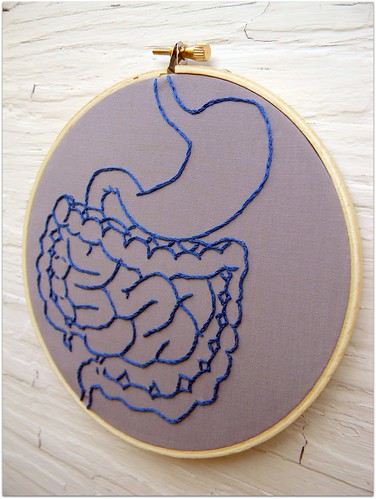
 Photo by Spectacles on Flickr
Digestion is rarely considered when diet and exercise plans are devised for weight loss. Promoting efficient digestion could be the missing link for many people who have been struggling with losing those unwanted pounds.

If your body can't break down food efficiently, it can lead to fat storage and a gut full of heavy, rotting gunk.

Digestion is the process in which the body totally breaks down the food we eat. This process begins in the mouth as soon as we take a bite of food and begin to chew. Saliva then starts to break down the food before it is passed down to the stomach. From the stomach the food moves to the small intestine, then to the large intestine and then finally to the colon.

The whole process can take up to 30 hours -- a rather long and energy-draining function.

Ever feel sluggish and devoid of energy after a heavy meal? Well, our bodies having to focus an incredible amount of energy on digestion has a lot to do with it.

Digestion is more efficient if we eat certain foods together and avoid eating others together, for example combining starches and proteins in the same meal is best avoided.

Food that isn't digested well can putrefy and rot in the stomach, causing bloating and indigestion. Food  then has a more difficult time passing through the intestines, often clogging up their some 30 feet. And because the food is rotten, no nutrients are being passed through the body, making a bad situation even worse.

The good news is that there are some things you can do to promote efficient digestion. Here are some tips:
  • Practice proper food combining
    • only eat one concentrated food at a time (starches, proteins)
    • only eat fruit on an empty stomach 
    • don't eat several types of meat in same meal
  • Eat vegetables first in any meal
  • Eat light breakfasts
  • Save heavier meals for dinner
The tips listed above will be covered in more detail in blogs later this month. 

Resources:
Diamond, Fit for Life, 1985
Snyder, The Beauty Detox Solution, 2011